In just a few years from now, most payments will be conducted via apps on phones, smart watches, biometric triggers and other mechanisms that do not involve swiping or inserting a plastic card. Just as credit cards have supplanted carrying cash, credit cards will soon be replaced by digital payments that rely on the credit infrastructure without using the card itself. According to March 2015 data conducted by the US Federal Reserve, 24% of consumers have utilized mobile payments of some kind in the past year. This includes an offline point of sale, in-app payment, or a mobile payment vehicle that transfers money to a third party creditor or bank.
PayPal conducted recent 2015 data as part of holiday shopping PR that shows millennials are having a growing ambivalence and somewhat distrust of credit cards. PayPal argues “Millennials want credit that is as digitally native as they are.”
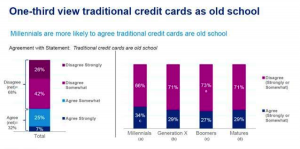
According to the data, a third of millennials view credit cards as a thing of the past. The argument against mobile payments especially with older generations is that it is not safe, secure, and private as possessing a physical card. However, millennials think otherwise and believe their information is not secure on physical credit cards.
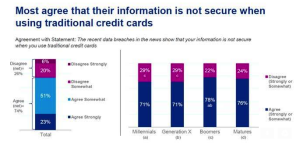
The pro-mobile orientation of millennials and the image of credit cards being unsecure and vulnerable to privacy and security attacks lays down the foundation for adoption to digital and mobile payment transfer technologies both online and offline. Using Apple Pay with the tap of a finger makes sliding credit cards seem awkward and unnecessary in comparison. Mobile apps like Uber allow mobile transactions, yet push these to the background to enable business models to generate revenue without relying on advertising.
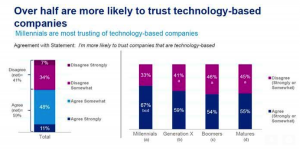
Additionally, millennials said they are more likely to trust companies that are based in the technology field. This raises the idea that companies like Apple and Google will be more trusted in the payment department more than banking companies like Visa, even though these banks and credit card issuers are behind the scenes critical to the success of the digital payments system.